
Every year I volunteer for career day at my sons’ schools. I use the same structure every time, and I still enjoy it. These days only my youngest has those events; he comes home beaming and chatty, and tells me everyone loved the presentation.
I start by introducing myself and my background, then say we’re going to do a history lesson.
History lesson
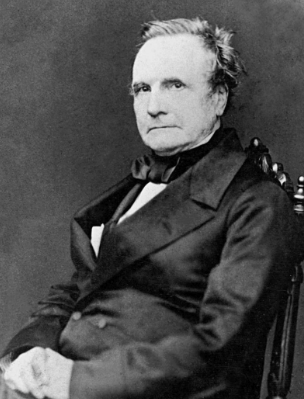
Charles Babbage (1791–1871) designed the first general-purpose mechanical computer (the Analytical Engine), even though it was never fully built in his lifetime. I use him to anchor the idea that “computer” used to mean a person or a machine that computed, and that the dream of automated calculation is old.
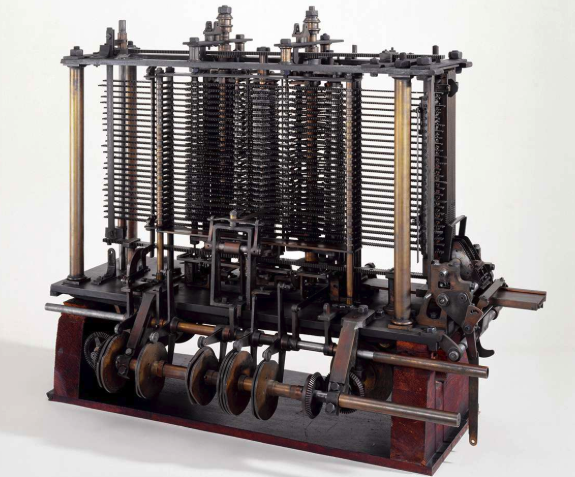
Ada Lovelace (1815–1852) wrote what we now call the first computer program: notes on how to use Babbage’s machine to calculate Bernoulli numbers. I stress that she saw the machine could do more than arithmetic, that it could manipulate symbols, and that programming and machinery have been tied together from the start.

Alan Turing (1912–1954) comes up next. I talk about the Enigma machine, what it was used for, and why breaking it mattered. I keep it age-appropriate but concrete: codes, war, and the idea that math and logic can change history.
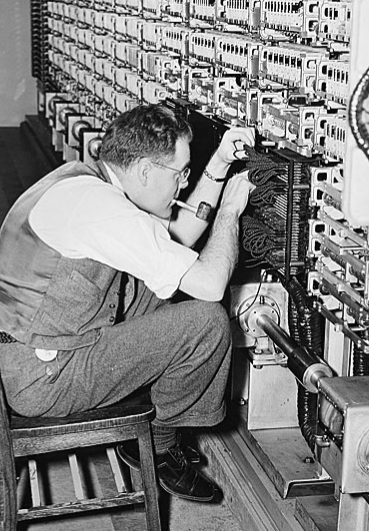
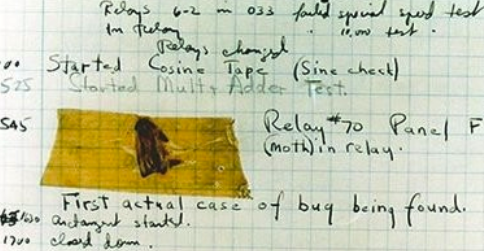
I use Grace Hopper (1906–1992) to explain where the word “bug” comes from in software: the famous moth in the Harvard Mark II logbook. I tell the anecdote and show why “debugging” isn’t just a cute name; it’s a real part of how we work.

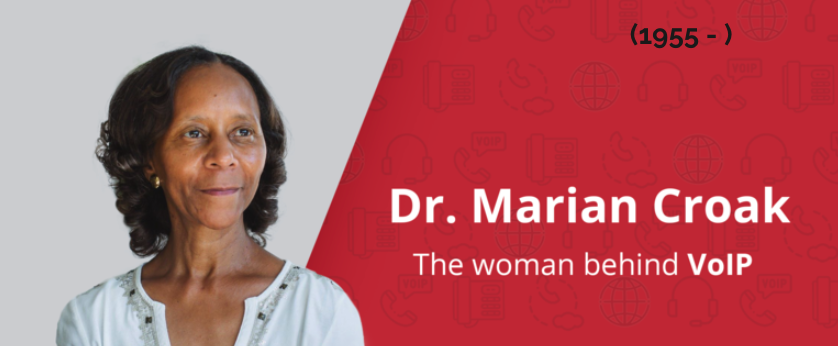
I close the history section with Dr. Marian Croak (1955–) and her work on Voice over IP (VoIP), the technology that turns voice into packets and back. I explain why that matters for the phones in their pockets and for the internet they use every day.
Binary and the light switch
Next I give a short math lesson: binary from first principles to bits and bytes. The analogy is the classroom light switch. I turn it off and on and map “on” and “off” to 1 and 0, then build up to how we represent numbers and why computers use base 2. No hand-waving: actual binary place values and a couple of small examples so they see the pattern.
The robot game
Then we play a game. I pretend to be a computer. The students have to get me from point A to point B using only: “Turn left,” “Turn right,” “Take one step.” I set up obstacles beforehand. There’s always chaos when I bump into something or pretend to get confused when several kids shout different commands at once.
I use that to transition into algorithms: a set of steps that get you from a starting state to a desired outcome. I stress that it’s not just “steps”; it’s doing it in a way that makes sense and doesn’t waste effort, and that programmers and computer scientists spend a lot of time thinking about that.
This year’s addition: a bit on AI
I’ve updated the talk for 2026. I close with a short segment on AI. I define a few terms for them: agent (something that takes in information, decides what to do, and acts) vs. model (the thing that does the pattern-matching and prediction). Then I point them at a couple of foundational ideas, including the cat paper and transformer architecture, so they have hooks for later. I keep it brief and accurate: no “AI will do everything,” just enough so the words mean something when they hear them again.
Questions
The whole time I encourage questions and answer anything I can. I don’t dodge the hard ones; I say when I don’t know and when something is still an open question.
Dear Mr. Shoop,
On behalf of our students and faculty, I would like to thank you again for taking time out of your busy schedule to participate in our Career Day and share your expertise with our students. Your presentation supports our efforts to educate students about how interests, abilities, and dedication are related to future career opportunities. We are glad you agreed to be a part of it and hope it was a positive experience for you as well.
Thank you for your support!